What Editors Actually Look for When Covering Architecture and Design Brands
In today’s crowded media landscape, only 3.15% of pitches get a response.1 And, many of those are just a courtesy “no thanks.” With shrinking editorial teams and writers’ inboxes flooded daily, getting coverage for your architecture or design brand has never been so competitive.
The firms and names that consistently land coverage aren’t louder, they’re just sharper, more intentional, and aware of how modern media relations actually works.
Wondering how to write a pitch to break through the noise? After years of incredible wins, even more polite passes, and insightful feedback from the incredible journalists we work with every day, we’re sharing five design pr tips and pulling back the curtain on what editors actually look for when deciding which projects, products, and experts make the cut.
#1. A Hot Take
We’ll give it to you straight: with 400k+ new firms emerging just in the last decade,2 “safe” trend predictions don’t stand a chance.
Editors at your dream publications receive hundreds of pitches a day, especially in the landscape of design and architecture media relations, where there are only so many titles to pitch. If your take sounds familiar (ie, ”maximalism is back, neutral palettes are out”), it’s already been claimed. A strong pitch doesn’t justify a trend—it drives a new conversation.
If you’re working with a PR agency, sure, give us your full stream-of-consciousness ideas as a starting point, but dig deeper. Ask yourself the age-old 5 W’s.
Starting with our blanket, “Maximalism will be big in 2026”, prediction:
- Who is driving the shift—designers, homeowners, developers?
- What does this mean for how projects are being approved, edited, and budgeted?
- Where is it actually showing up—in hospitality, residential, or mostly online?
- When did it begin—is this nostalgia, or a byproduct of constant inspiration at our fingertips?
- What’s next—does this push us toward softer minimalism or sharper contrast?
That’s how you move from a generic soundbite to something editors actually want to quote: “Despite what Pinterest leads you to believe, true maximalism is still rare. What’s really taking off is the confidence to make one unapologetic design move and stop there.”
Calling out project examples will build credibility, but visuals seal the deal. When you have both, your chances of coverage increase tenfold.
UpSpring Pro Tip: Don’t be quoted saying something you don’t fully stand behind for press sake. Instead, root your commentary in real-life stories and anecdotes from your recent projects to add color to your expertise.

#2. Commissionable Product Recommendations
With magazine ad spend projected to drop almost a billion dollars by 2029,3 publications are relying on affiliate revenue to stay afloat. That means your product recommendations need to be monetizable for real coverage consideration.
Let’s break this down. When brands opt into an affiliate marketing program (more on that here), they incentivize writers to feature their products by offering a percentage of sales.
When pulling together source lists or product recommendations:
- Prioritize brands with strong digital presences—usually, these are the brands already actively on affiliate platforms
- Confirm that they offer affiliate commission with a quick Google search
- List direct-to-trade or niche brands without e-commerce or tracking capabilities last
Or, you can work with us. We’ll do the heavy lifting and give you time back to focus on designing those mag-worthy projects.
#3. Visuals That Can Tell A Story
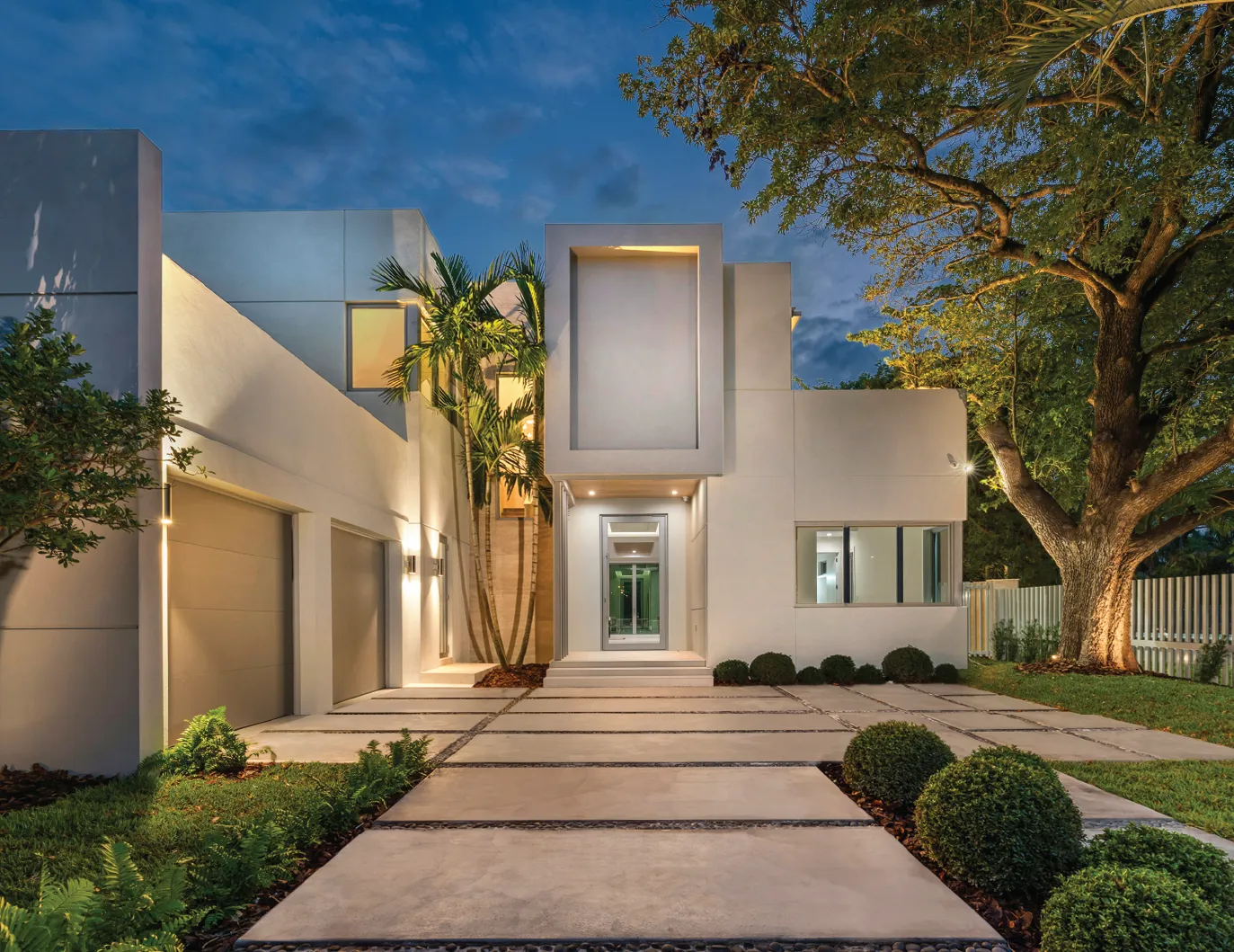
Increasingly, talented designers come to us frustrated wondering why a certain project got a home tour placement over their own. Please know, we hear you! You pour your heart into your work and deserve your flowers, but here’s the reality: editors choose stories, not spaces.
With a sea of beautiful homes flooding their inboxes every day, editors need to immediately see the narrative unfold through a photo set. Not just finished rooms, but a sense of the process, client personality, and a distinctive point of view.
That means:
- Working with a vetted architecture and interiors photographer who knows the landscape
- Lived in styling that feels intentional, not perfect
- Capturing moments that reveal how each space supports the end user
For a guide on shooting your next project, check out our recent blog, complete with best practices and how to use your portfolio as a calling card for your next big break.
#3. Visuals That Can Tell A Story
Increasingly, talented designers come to us frustrated wondering why a certain project got a home tour placement over their own. Please know, we hear you! You pour your heart into your work and deserve your flowers, but here’s the reality: editors choose stories, not spaces.
With a sea of beautiful homes flooding their inboxes every day, editors need to immediately see the narrative unfold through a photo set. Not just finished rooms, but a sense of the process, client personality, and a distinctive point of view.
That means:
- Working with a vetted architecture and interiors photographer who knows the landscape
- Lived in styling that feels intentional, not perfect
- Capturing moments that reveal how each space supports the end user
For a guide on shooting your next project, check out our recent blog, complete with best practices and how to use your portfolio as a calling card for your next big break.
#3. Visuals That Can Tell A Story
Increasingly, talented designers come to us frustrated wondering why a certain project got a home tour placement over their own. Please know, we hear you! You pour your heart into your work and deserve your flowers, but here’s the reality: editors choose stories, not spaces.
With a sea of beautiful homes flooding their inboxes every day, editors need to immediately see the narrative unfold through a photo set. Not just finished rooms, but a sense of the process, client personality, and a distinctive point of view.
That means:
- Working with a vetted architecture and interiors photographer who knows the landscape
- Lived in styling that feels intentional, not perfect
- Capturing moments that reveal how each space supports the end user
For a guide on shooting your next project, check out our recent blog, complete with best practices and how to use your portfolio as a calling card for your next big break.
#4. Something Quirky
Every pitch needs a strong hook. In the way that your expert commentary could use a hot take, your project should have a standout “why didn’t I think of that” moment.
It doesn’t need to be flashy, just memorable. Think:
- A novel office amenity space, like a dedicated remote therapy pod
- Monkey bars or climbing walls in kids’ rooms to burn off energy before bed (an UpSpring PR client original!)
- Locally sourced pieces from an art school that lend to a hotel’s sense of place
These are the little moments editors will cling to to get their story clicks. If they’re not highlighted in your pitch, they’ll be missed entirely.
#5. Relevance
This is the kicker. You can have 1-4 lined up, but without relevance, it isn’t even worth the pitch.
To clarify, relevance doesn’t always have to be contrived through timeliness or seasonality. It can be created through:
- A solution to a struggle readers resonate with
- A client story that mirrors their own
- Behind the scenes anecdotes that humanize the process
Permit delays. Supply chain issues. Budget pivots. These moments, even in aspirational spaces, make design feel real, and editors know readers connect with them.
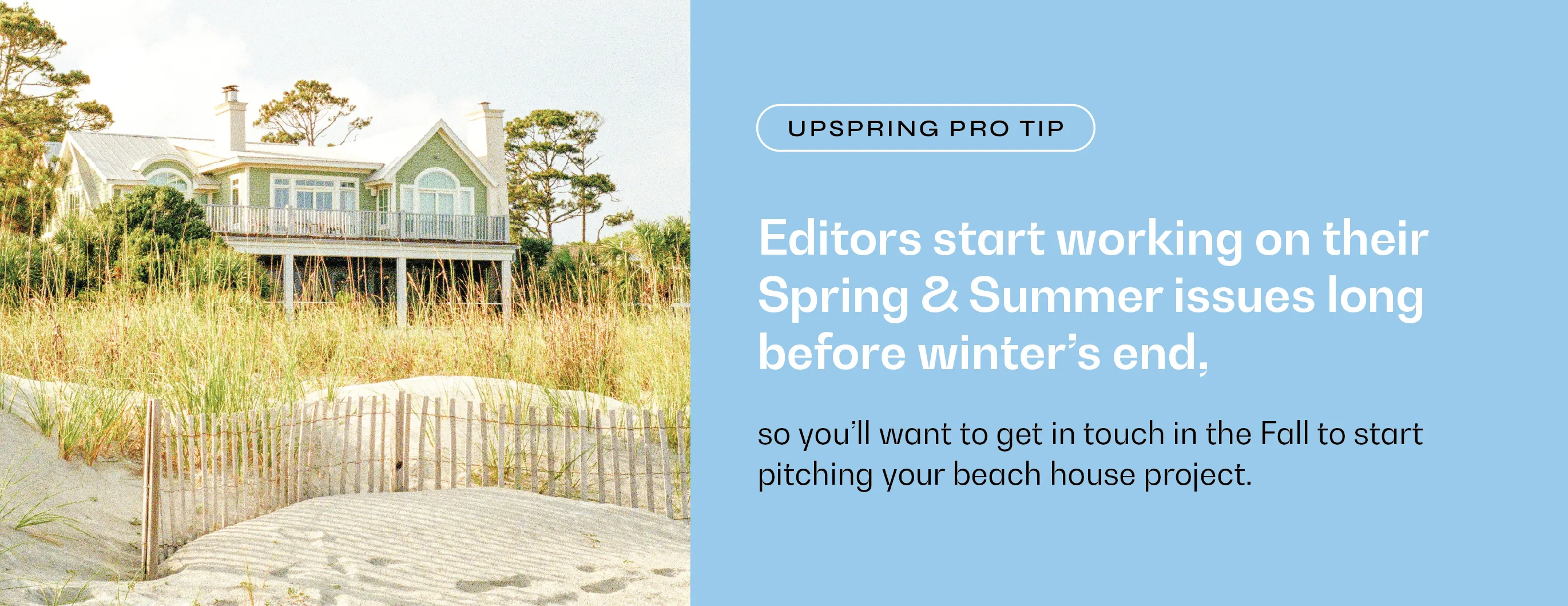
UpSpring Pro Tip: Editors start working on their Spring & Summer issues long before winter’s end, so you’ll want to get in touch in the Fall to start pitching your beach house project. We actually had a feature held for a full YEAR to line up with seasonal coverage in The New York Times. Good things are often worth the wait

The Key Takeaway
Your expertise and projects don’t have to be revolutionary, just memorable. Working with a public relations agency can help you and your team weed out the fluff and capitalize on unique selling points to stand out above the rest.