FURNITURE, FIXTURES + EQUIPMENT
You have the product designers want. Now get it specified in your next sector.
We work both sides of the specification table, representing the design firms that write the spec and the manufacturers who earn it. We know where a designer's shortlist gets shaped, how a product becomes credible in a sector before its first project there, and how to keep the product in the project once it is specified.
That is the work we do, with manufacturers who have the product and the ambition, and need a market position that matches both.
AEC industry
served
delivered in 2025
manufacturers
01
Hospitality.

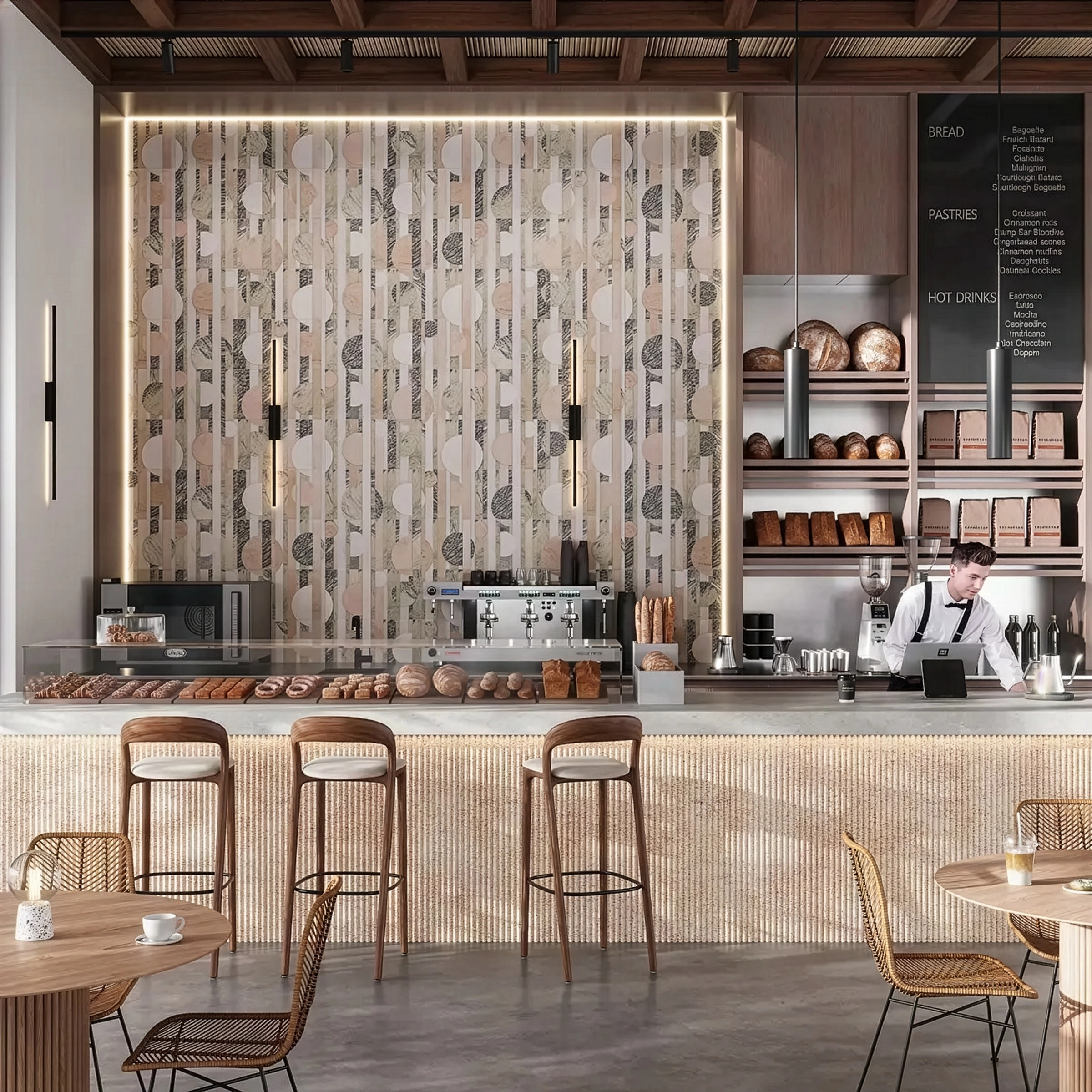
Specification runs through interior designers and the procurement firms that turn their schedules into orders, and it moves fast. Preference gets built in Hospitality Design, Boutique Design, and on the floors at HD Expo and BDNY, then it is tested hard at procurement, where budgets get cut and specified pieces get value-engineered. A brand story strong enough to survive that cut is what holds the order.
02
Workplace and contract.
The dealer network and contract designers decide what gets specified here; durability, warranty, and lead time carry as much weight as design. Preference forms at NeoCon and in Interior Design and Work Design Magazine, and it compounds when a brand is easy to specify through dealer channels and configuration tools.
03
Healthcare.
Specifiers weigh cleanability, infection control, and evidence alongside design, and approval cycles are long. A product earns its place through documentation, performance data, and a presence in Healthcare Design that signals the brand understands the environment, not only the aesthetic.
04
Senior living.
This market sits between hospitality and healthcare: it wants the warmth of a hotel interior with the durability and safety of a clinical one. The designers who specialize in it look for brands that solve both at once, and reward the ones that speak to dignity as fluently as they speak to specification.
05
Education.
Budgets, bid cycles, and durability shape specification as much as design does, and institutional buyers sit alongside the designers. Brands win here by being specifiable within public procurement rules and by proving they hold up through years of heavy, daily use.
06
Luxury residential.
Specification runs through interior designers and showrooms, and brand cachet does real work. Preference is built in Architectural Digest, Elle Decor, and Luxe Interiors + Design, where a product gets chosen as much for what specifying it says about the designer as for the piece itself.
Digital turns it into specification.
The challenge is timing. A designer may discover a collection in Hospitality Design or at a trade show months before the right project arises. When that opportunity does emerge, the brand’s website, product information, search presence, and follow-up content must make it easy to rediscover the product, evaluate it, and confidently specify it.
An integrated program connects those moments. Media coverage leads to a website built around the information specifiers need. Completed projects become case studies, search content, and social proof. Showroom and trade show conversations continue through timely email and digital content. Consistent coverage and authoritative website content also give AI tools stronger evidence to recommend the brand.
The result is a connected path from awareness to specification, with every channel working together to keep the brand visible, credible, and easy to choose.
Most FF&E brands have never checked what an AI tool says when a designer asks it for options.

Public Relations
Earn the coverage designers read before they specify. We place brands in the titles that shape FF&E preference, from Interior Design and Metropolis to the hospitality, workplace, and healthcare trades. Product features, bylines, and project stories build the credibility that shapes what a designer specifies.
READ MORE ➔

Brand Positioning
Belong in a sector before your first project there. Moving from workplace into healthcare, or hospitality into senior living, takes more than a new catalog. We build the argument, messaging, and proof that make a brand credible in a market that does not know it yet, so specification can start.
READ MORE ➔

Marketing Services
Run every channel from one plan, not one tactic at a time. Social, email, print, content, and the trade show floor do more when they are built backward from the same goal, each piece making the next land harder. We set the strategy, create the work, and manage it month to month, adjusting as the business moves.
READ MORE ➔

Branding and Creative
Get specified by name, not as an "or equal." A distinct brand and point of view make a product the one a designer names outright, instead of a category any competitor can fill. We build the identity and visual system that make the brand unmistakable everywhere a designer meets it.
READ MORE ➔
Website Design
Give the brand a site as considered as the product. For a design-driven manufacturer, the website is evidence of taste and the best salesperson in the room when no rep is there. We make it carry the brand and the case, with the specs, finishes, and downloads designers need, built so search and AI can recommend it.
READ MORE ➔

Content Engineering
Be the brand AI names when a designer researches a category. We write and structure a manufacturer's content so search and AI tools can find it, trust it, and cite it, bringing SEO, GEO, and AEO into one discipline. Done well, it gets the brand named while a specifier is still figuring out what to use, not after the shortlist is set.
READ MORE ➔
ORIGINAL BTC
to thought leadership.

01
How do FF&E brands get specified by interior designers?
Designers specify the brands they already know and trust, so specification is built long before a project starts. It grows from editorial presence in the titles designers read, like Interior Design and Hospitality Design, from being seen at NeoCon, HD Expo, and BDNY, from current listings on Material Bank, and from a website that answers a specifier's questions fast. A brand visible across those moments becomes the easy choice when the specifications get written; one that appears only at the point of sale is found too late.
02
Why does getting specified not guarantee getting purchased?
In FF&E, the designer who specifies a product and the dealer or procurement team who buys it are often different people with different priorities. The designer chooses on design intent; procurement is measured on budget. A specified product can be swapped for a less expensive equivalent during value engineering, in a meeting the manufacturer never attends. What holds the order is a brand strong enough that replacing it looks like the riskier choice, which is why specification and purchasing are one decision, not two.
03
What does an FF&E marketing agency do?
An FF&E marketing agency helps furniture, fixtures, and equipment manufacturers earn specification from designers and hold it through purchase. The work spans media relations in the design and trade press, brand positioning to enter new sectors, a website built to help designers specify, content engineering so AI tools cite the brand, and marketing services that run every channel from one strategy. What makes it specialist is knowing how FF&E is actually chosen: which publications shape preference, how the dealer and procurement channels work, and where a spec is won or lost.
04
How do you market a furniture brand to interior designers?
Marketing a furniture brand to interior designers is less about selling and more about being present where they research and trusted enough to be a name they reach for. Designers rarely respond to a hard pitch; they respond to a brand that turns up consistently and credibly in the press, in the markets, on the platforms they specify from, and in the AI answers they now lean on. Done well, the brand is familiar by the time a project needs it. What matters is not impressions but how often it gets written into projects.
05
What is the specification rate, and how do you improve it?
Specification rate is the share of active projects in which a designer specifies your product. It is a primary commercial metric because it predicts revenue in a way awareness numbers do not. Improving it means strengthening every moment between a designer's first encounter with the brand and the point they write it into a project, in sequence rather than one channel at a time. That coordinated approach, not a single campaign, is what lifts the rate over time.
06
What role does brand play in getting FF&E specified?
A product is what you make; a brand is what designers believe about it before they have handled it. In FF&E, that belief is a specification asset: a clear point of view and a consistent presence make a product easier to choose in research and let it be specified by name rather than as an "or equal." When two products perform alike, the stronger brand is the one that holds the order after the rep has left the room.
07
How do I expand my FF&E brand into a new vertical?
Vertical expansion starts with building the position before the first project in the category exists. Designers in hospitality, healthcare, senior living, workplace, or education have no reason to consider a brand they do not know, however good the product. The work is to earn credibility in the publications that vertical reads, take a point of view on the questions its designers are asking, and build the content that makes the brand a credible option before it has a project to show. The position comes first; the specifications follow.
08
How is AI changing how designers discover and specify FF&E products?
AI has become a first stop in FF&E research. Before a designer contacts a manufacturer, they increasingly ask an AI tool which brands to consider, and its answer is built from what credible, independent sources publish about each one, not from what a brand says about itself. Earning a place in that answer is its own discipline: content engineering, the work of writing and structuring a brand's content so AI tools can find it, trust it, and cite it. It brings search, generative engine optimization (GEO), and answer engine optimization (AEO) into one practice. Most FF&E manufacturers have not done this yet, which makes now the moment to become the brand AI learns to recommend.
09
What does PR for an FF&E manufacturer look like, and how is its ROI measured?
PR for an FF&E manufacturer is a program of editorial presence, not a press-release calendar. It works two audiences: the design community that specifies, through product features, bylines, and project coverage; and the business community of investors and acquirers, through the executive press. Its return is measured in specification and orders, not the volume of coverage. What matters is whether that coverage moves a designer from awareness to preference to writing the product in and defending it at procurement.
10
Does this work if we already have an in-house marketing team?
Yes, and most of our clients have one. A fully staffed team gains a senior strategic partner, AI-native thinking, and media relations range that are hard to keep in-house, without giving up execution. A one- or two-person team gains an operator to carry the day-to-day and the reporting, so its own time goes where it counts most. In both cases the team stays in the lead, with UpSpring adding capability on top of what it already does well.
11
What sets a specialist FF&E agency apart from a generalist firm?
How FF&E gets specified and bought is not obvious from the outside. Knowing which publications shape designer preference, how the dealer and procurement channels work, where value engineering strips a product out, and what a brand must say to be taken seriously in a new vertical takes years inside the industry. A generalist can run tactics competently; a specialist brings the strategy those tactics need, built on how FF&E decisions actually happen. UpSpring has spent seventeen years inside this industry, not adjacent to it, working both sides of the specification table.