
In the architecture and design industry authority has historically been tied to individual leadership and the "singular creative vision." But leadership is no longer defined strictly by hierarchy or technical expertise. Today, it is expressed through visibility, storytelling, and the ability to build radical trust.
During our recent UpSpring Circle panel on women leading in design we sat down with three trailblazers; Erica Holborn (CEO of Sandow Design Group), Melissa Hanley (Co-founder of Studio Blitz), and Chaya Krinsky (Co-founder of TOV Furniture), to discuss how women-led businesses are reshaping the built environment.
The takeaway was clear: the rules of power are being rewritten. From WBENC-certified design leadership to the "superpowers" of empathy and adaptability, the future of the industry is being built on a new set of values.
Traditional architecture and design models often center on a "boss" making top-down decisions. Our panelists argued that the most effective women in leadership are moving toward a flatter, more humble model.
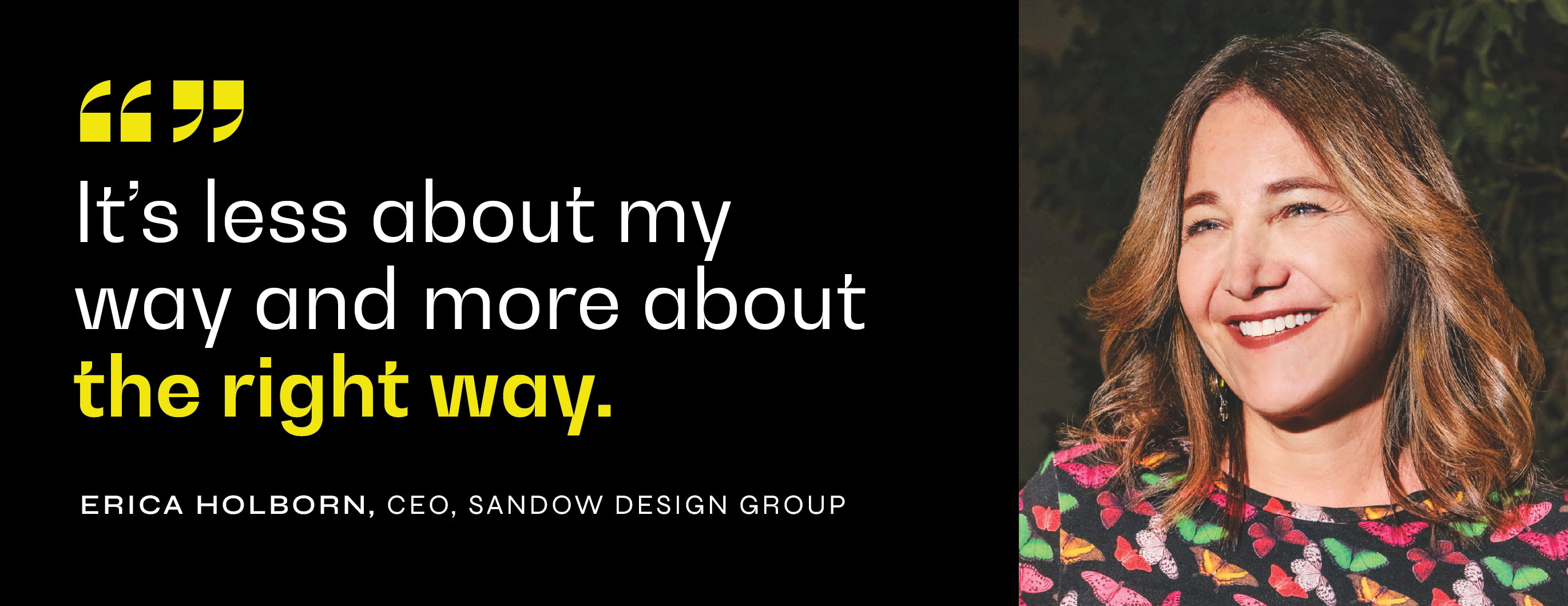
"It’s less about my way and more about the right way," noted Erica Holborn. She highlighted how women often bring more empathy into team management, creating environments where people feel comfortable contributing ideas. This shift from ego to outcome isn't just a "nice-to-have"—it impacts the bottom line and the quality of the work.
Melissa Hanley echoed this, noting that Studio Blitz was named intentionally to reflect a team effort rather than a partner's name. "We wanted a name that expressed our values... a lot of people sprinting like hell at a singular goal." By stepping away from individual authorship, firms can foster a culture where curiosity outweighs the need for control.
Whether running a global furniture brand or a high-stakes architecture firm, the panelists agreed that being a woman in a leadership position often comes with a "superpower" of multitasking and "feeling" the business.
"Women tend to operate in a very integrated way," explained Chaya Krinsky. "We’re thinking about product, customers, brand, and operations all at once." This intuition allows leaders to engage in "pattern recognition", listening to feedback from the market and the team without reacting impulsively.
This integrated approach is also redefining the workday itself. Caroline Schillaci and Hanley aligned on their shared "unique relationship to time," where flexibility and asynchronous work are no longer seen as obstacles to productivity, but as strategic advantages that keep high-performing talent engaged in a women-led business.

For a brand to thrive in 2026, it cannot hide behind its products; it must lead with its values.
"Visibility isn’t just about being seen; it’s about being understood," Krinsky noted. "The more visible and clear your brand is, the shorter the decision-making process becomes for the customer." This is particularly true for firms where design leadership is a core differentiator. When the internal culture of a firm matches its external storytelling, it builds a level of trust that competitors cannot easily replicate.
Holborn pointed to the importance of "purpose-driven" work, underscoring how leaders who lean into what they are passionate about, like sustainability or social impact, naturally gain more traction and loyalty in the market.

The rules that once governed the architecture and design industry are officially in "beta." The companies leading the next decade will be those that embrace:
As Krinsky put it: "This is our moment." Leading out loud isn't about being the loudest person in the room, it’s about having the clarity and kindness to lead with purpose.
Want to hear what’s shaping the future of AEC and design? Visit our on-demand gallery of past panel discussions.
.avif)
