How AEC Executives Become Go-To Industry Experts
.webp)
In the architecture, engineering, and construction (AEC) industry, expertise alone is no longer enough. The firms and executives gaining the most visibility, winning the strongest projects, and attracting the best partnerships are those publicly recognized as trusted industry voices. Today’s clients, developers, municipalities, investors, and media outlets want more than technical competence; they want leaders who can explain industry trends, anticipate challenges, and communicate a clear vision for the future of the built environment through strategic thought leadership PR and consistent industry visibility.
That’s where a PR agency comes in. PR for CEOs and becoming a go-to industry expert is not about self-promotion or chasing attention. It’s about building credibility over time through consistent visibility, thoughtful positioning, and valuable commentary. For AEC executives, this leads to stronger business development opportunities, speaking engagements, media coverage, and long-term brand authority for both the individual and the firm.
Define a Clear Area of Expertise
One mistake executives make is trying to speak on every topic as an expert. However, the most recognizable industry voices are known for something specific. For instance, an architect might be passionate about adaptive reuse and become a voice on that topic, whereas an engineer might be hyper-focused on resilient infrastructure. The key is to identify the intersection between industry demand, your specific expertise (and data points and project work to back it up!), the firm’s strategic priorities, and emerging conversations within the market. A public relations agency can help pinpoint what makes your specific experience unique to the market and how to talk about it in an engaging way with the public.
Build Thought Leadership, Not Self-Promotion
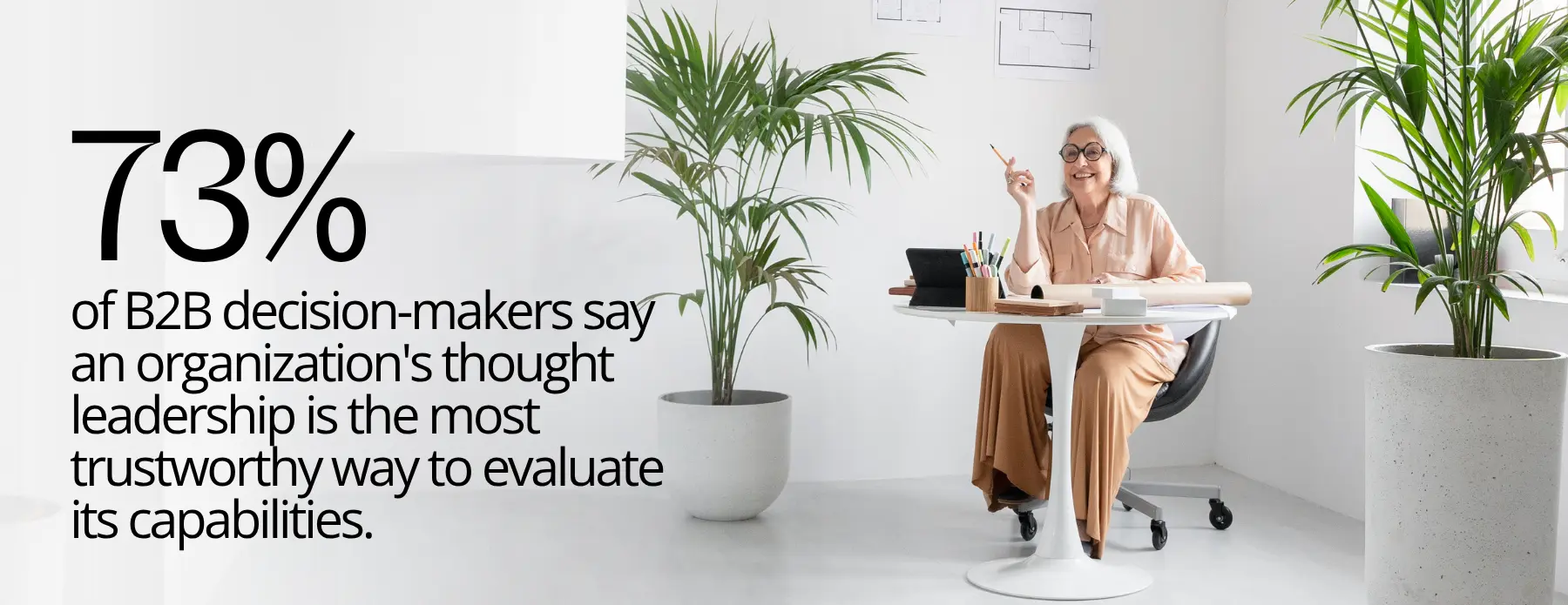
The strongest executive thought leadership offers value before demanding attention, particularly in the AEC industry, where credibility must come first. When thinking about a b2b thought leadership strategy, executives should focus on sharing insights into industry trends, lessons learned from projects, commentary on regulations or market shifts, data-backed perspectives, and solutions to common client challenges. It’s easy to state your credentials and why your firm is the best, but it’s most important to build credibility by asking questions like what problems are facing our industry, what questions are clients asking, and what unique perspective can I contribute to this conversation?
Use Media Relations Strategically
Media coverage remains one of the fastest ways to establish credibility in the AEC industry, especially with the rise of LLMs. When a chatbot pulls sources, more than 85% of cited links are now from earned media coverage. Being quoted in respected trade publications or business media positions executives as trusted experts rather than simply company representatives. Editors and reporters are constantly looking for knowledgeable professionals who can provide concise, informed commentary on timely topics. The executives who respond quickly, provide useful insights, and communicate clearly are the ones journalists return to repeatedly. Over time, repeated media exposure builds familiarity and trust with both reporters and industry audiences.
Align Executive Visibility With Business Goals
A successful b2b thought leadership campaign should be tied to broader business development and firm growth goals. It should not exist in a vacuum, but rather support the types of projects, clients, and partnerships a firm wants to attract. For example, if a firm is expanding its hospitality portfolio, they may want to speak around guest-centered design, hospitality infrastructure planning, or travel trends. A strategic PR agency can help align speaking opportunities, media outreach, and industry visibility efforts within measurable business objectives, ensuring positioning supports long-term growth rather than simply generating attention.
Create a Consistent Multi-Channel Content Presence
Thought leadership PR is most effective when audiences encounter it consistently across multiple platforms. A single interview or conference panel is valuable, but long-term authority is built through repetition and visibility over time. Strong executive positioning and PR for CEOs often includes a mix of contributed articles, media commentary, LinkedIn posts, speaking engagements, podcasts, webinars, newsletters, and project-driven storytelling. One strong insight can often be repurposed into several forms of content, allowing executives to maximize visibility while maintaining a manageable time commitment. Consistency helps reinforce expertise and keeps both the executive and firm top-of-mind within the industry.
Show Up Where Industry Conversations are Happening
Industry expertise is built through participation. The most recognizable AEC leaders are actively involved in the conversations shaping the future of the built environment. This may include speaking at conferences, participating in industry associations, joining panel discussions, contributing to trade publications, appearing on podcasts, or engaging thoughtfully on LinkedIn. Visibility in these spaces helps executives build relationships with journalists, peers, clients, and potential collaborators while demonstrating an active understanding of evolving industry challenges. Over time, consistent participation helps position executives as trusted voices within the broader AEC community.

In today’s competitive AEC landscape, technical expertise alone is no longer enough to stand out. Visibility, credibility, and strategic positioning play an increasingly important role in how firms win work and build influence.
For AEC executives, becoming a recognized industry expert is not about personal branding for its own sake. It is about establishing trust, shaping conversations, and demonstrating leadership within a rapidly evolving industry.
When supported by thoughtful PR and marketing strategies, executive expertise becomes one of the most valuable business development tools a firm can have.
In today’s competitive AEC landscape, technical expertise alone is no longer enough to stand out. Visibility, credibility, and strategic positioning play an increasingly important role in how firms win work and build influence.
For AEC executives, becoming a recognized industry expert is not about personal branding for its own sake. It is about establishing trust, shaping conversations, and demonstrating leadership within a rapidly evolving industry.
When supported by thoughtful PR and marketing strategies, executive expertise becomes one of the most valuable business development tools a firm can have.
In today’s competitive AEC landscape, technical expertise alone is no longer enough to stand out. Visibility, credibility, and strategic positioning play an increasingly important role in how firms win work and build influence.
For AEC executives, becoming a recognized industry expert is not about personal branding for its own sake. It is about establishing trust, shaping conversations, and demonstrating leadership within a rapidly evolving industry.
When supported by thoughtful PR and marketing strategies, executive expertise becomes one of the most valuable business development tools a firm can have.
